
 Rivenditori Mondiali della Gamma Pirelli Collezione
  Michelin Collections Distributori nel Regno Unito di pneumatici classici e d'epoca
 Pneumatici Ford Fiesta
Ford Fiesta Tyres
-
Ford Fiesta Tyre Pressures
Generation Model Front (Psi) Rear (Psi) MK1 950 Basic, Popular & Popular Plus 27 27 MK1 950 L 1100 L & 1100 Popular Plus 23 26 MK1 950 Ghia, 1100 S & 1100 Ghia 23 26 MK1 1300 GL, 1300 S & 1300 Ghia 23 26 MK1 950 L, 950 GL, 1100 L, 1100 GL & 1100 Ghia 23 26 MK1 1100 S, 1300 S, Finesse 950, 1100 & 1300 23 26 MK1 Supersport & XR2 26 26 MK2 950, 1100 Popular Plus & L 26 26 MK2 1.6D 27 27 MK2 1.1 & 1.4 Ghia 23 26 MK2 XR2 26 26 MK3 1.4S 23 26 MK3 1.0, 1.1, Popular & Popular Plus 26 26 MK3 1.1L, 1.1LX, Ghia, 1.3LX, SXi, 1.4LX & Ghia 29 26 MK3 1.6S 26 26 MK3 1.6 XR2i & RS Turbo 29 26 MK3 1.8 XR2i & RS 1800 29 29
Ford Fiesta History
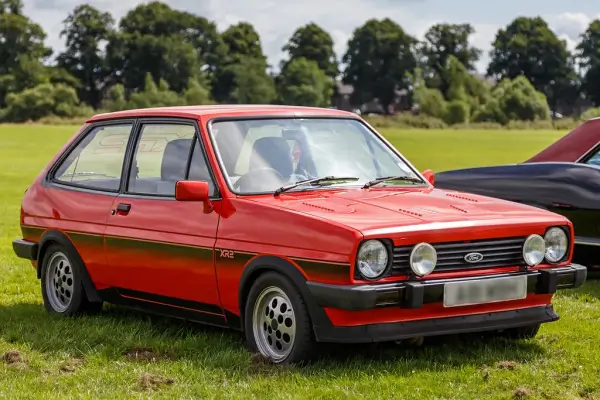
Ford Fiesta XR2
The Ford Fiesta received approval for development in 1972 at the start of the supermini explosion in the early 70s, seeing cars like the Renault 5 and Volkswagen Golf become very popular, the demand for small cars with good fuel economy surged following the 1973 Oil Crisis.
The Fiesta was a step outside the norm for Ford, being its second-ever front-wheel-drive car, (The first being the Taunus 12M a decade prior), its first front-wheel-drive car with a transverse engine layout, and also its smallest vehicle to date. The MK1 Supersport was released in 1981 to test the waters for a sportier hatchback, eventually leading to the XR2 being released the following year, easily the most popular version of the Fiesta, with a huge cult following.
The European market was where the Fiesta excelled, it was the ninth best selling vehicle in the UK in its first year and continued to be a hit in the UK until 1982. The United States did not have the same reception of the Fiesta, lasting only three years before the Ford Escort eventually replaced both the Fiesta and Pinto in 1981.
1981 and 1982 were a pivotal couple of years for the Fiesta's growth. Between the US dropping the Escort from its dealerships and a huge new competitor in the UK in the form of the Austin Metro, the Fiesta needed an upgrade. The Fiesta Mk2 debuted in August 1983 with a revised front end, widening the chassis structure, increasing the front track width and new wraparound headlights. Brakes, steering, and carburettors all received upgrades as well. This generation of Fiesta was Ford's best yet, selling over 150,000 models in 1987, finishing second in charts sales, first place went to the Ford Escort.
The Mk3 Fiesta was available in the UK starting April 1989, switching to a very different platform, of a semi-independent torsion beam arrangement, making a big change in the appearance of the car. This generation finally brought about a 5-door hatchback version, something that was wanted in the model lineup for some time, especially since the Opel Corsa and Peugeot 205, two major competitors, had 5-door models in their lineup. The XR2i was released the same year in its 8-valve CVH engine version, with a 16 valve version replacing that in 1996. The RS Turbo was introduced in 1990 but ceased production in 1992 after poor reception surrounding handling, insurance issues, and a large amount of these cars being stolen. The RS Turbo was replaced in 1992 by the RS1800, featuring a 1.8L Zetec engine.
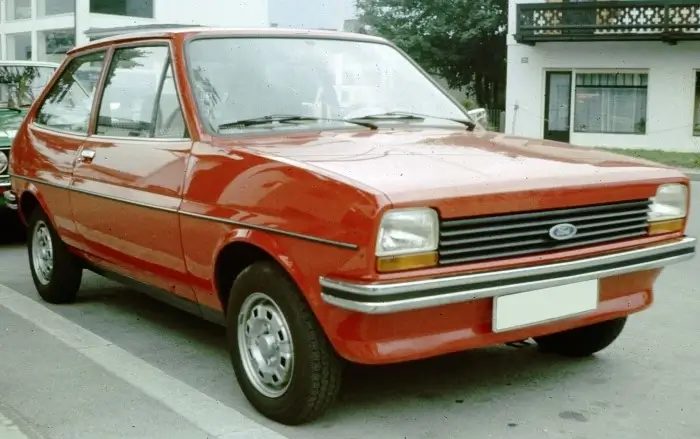
Ford Fiesta Orange